William Martino Shop Books
THE STORYTELLER

About William Martino

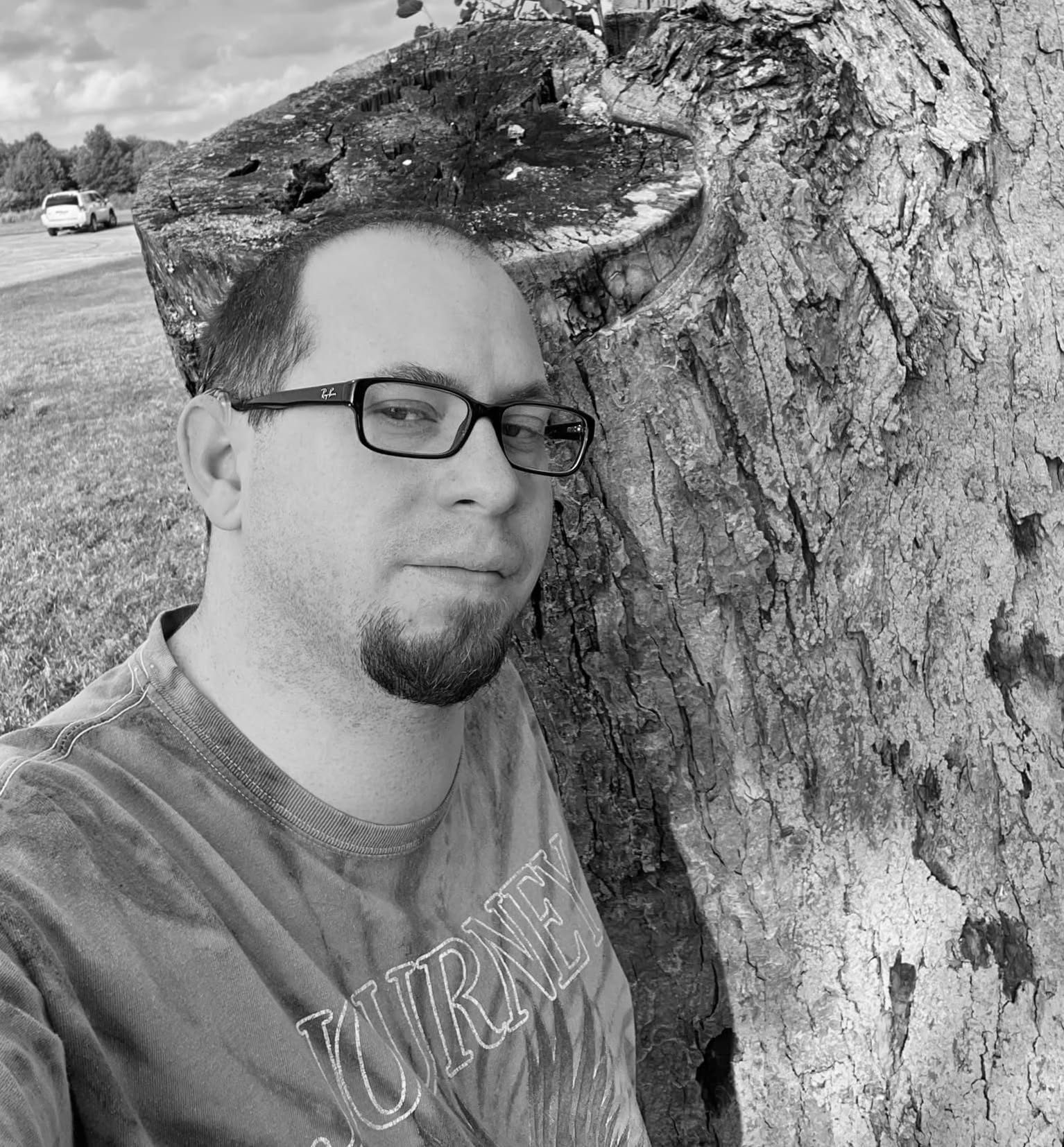
William Martino
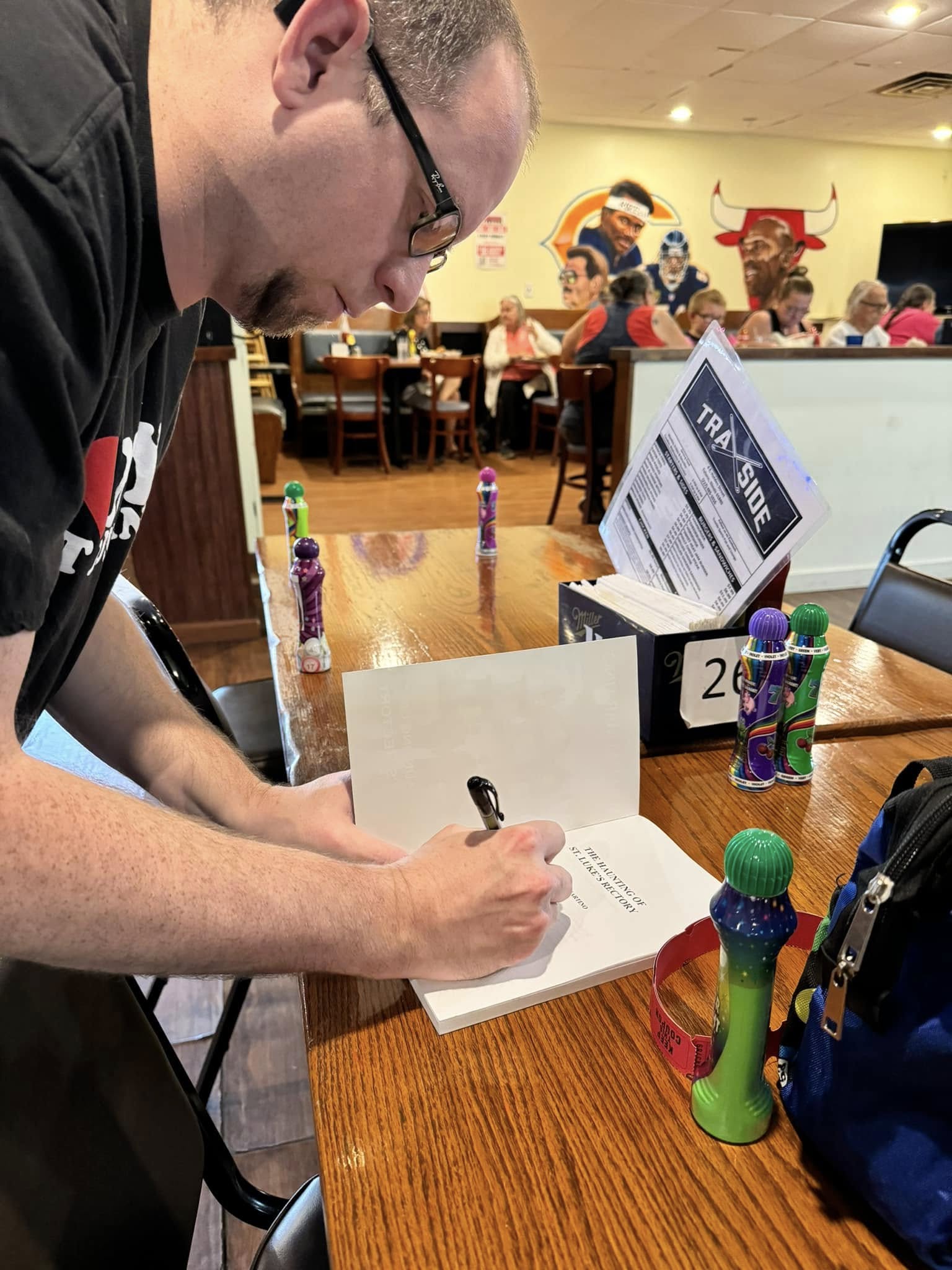
William Martino signing a book
BEHIND THE STORIES

Fear, faith, obsession, love, and redemption.

William Martino is an author drawn to the places where darkness and humanity collide. His writing explores horror, obsession, faith, identity, love, and redemption—sometimes through the supernatural, sometimes through the deeply personal, and always through characters who find themselves confronting something they cannot easily escape.

Martino made his literary debut with The Haunting of St. Luke's Rectory, a chilling novella that established his fascination with haunted places, unsettling mysteries, and the things that linger long after we think they are gone. He followed it with The Devil's Vinyl, a dark supernatural horror novel centered on heavy metal, a cursed record, and the devastating consequences of awakening something that should have remained buried.

His work takes a deeply personal turn with I Was Never Broken: A Memoir of Faith, Identity, Love, and Becoming Who I Was Always Meant to Be. Drawing from his own journey, the memoir examines the lasting impact of religious conflict and conversion therapy while ultimately telling a story of self-acceptance, renewed faith, love, and finding the courage to live authentically.

With Blood Pact, Martino ventures into dark romance, bringing horror and an enemies-to-lovers story together in a tale of two men whose hatred may be far easier to surrender to than the attraction neither can deny.

Whether writing about ghosts, demons, forbidden desire, or the wounds we carry within ourselves, Martino is interested in one question above all: What happens when we are forced to confront the darkness—and discover that it has been waiting inside us all along?

When he isn't writing, Martino can usually be found immersed in the worlds of horror, heavy metal music, playing bingo in a bar, or spending time with his husband, and their two cats. He lives in central Illinois and is continually searching for the next story that will frighten, challenge, or haunt his readers long after the final page.

BEHIND THE VEIL

Meet the Storyteller:

Frequently Asked Questions

Choose a question to reveal William’s answer.

What does "Fear Has A Storyteller" mean to you?

My own experiences growing up have shaped the way I see fear, and my lifelong interest in horror—both in books and in film—has given me even more inspiration. The horror writers and filmmakers I admire all have their own signature scares, their own voices, and their own way of telling stories that stay with us. Now, through my own writing, I put forward mine.

Fear is one of the most universal emotions we experience. It can be loud and overwhelming, or quiet and almost invisible, but in one way or another, it often becomes part of the stories we tell about ourselves, about others, and about the world around us. Sometimes fear drives us. Sometimes it changes us. Sometimes it reveals something about who we really are.

To me, "Fear Has A Storyteller" means that fear is never just an emotion. Behind every fear, there is a story—and I want to be the one who tells it.

Why are you drawn to darker stories?

I'm not sure I can point to one exact reason why I've always been drawn to darker stories. I think part of it is that I've always enjoyed being scared—when the fear is something I choose. There is something exciting about stepping into a frightening story, knowing I can experience that tension, uncertainty, and adrenaline from a safe distance.

Maybe some of that connection comes from the very real fears I experienced growing up, and maybe it doesn't. I don't think I need to have a perfect explanation for it. What I do know is that horror has always captured my imagination more strongly than almost any other kind of story. Darkness, suspense, the unknown, and the things people do when they are afraid have always interested me.

For a long time, romance was almost the opposite. Romantic stories simply didn't connect with me in the same way. That changed later in my life, when I met my husband and was able to experience love in a way that felt real and personal to me. Since then, I've become much more interested in what happens when those two sides of storytelling meet—the darkness and the tenderness, fear and love, loss and connection.

Maybe that contrast is part of what draws me to the stories I write now. The darkness makes the moments of hope, love, and redemption mean even more.

There's a little side note here: writers have a saying of "you write what you know." This could not be more true, and it is certainly very true here.

What themes connect your different books?

Fear is probably the strongest thread connecting all of my books, but it is never the only one. Hope, love, friendship, loss, and some form of redemption tend to find their way into my stories as well. Sometimes that love is romantic, and sometimes it is simply the bond between people who refuse to give up one another.

Even my memoir, although it is nonfiction, carries many of these same themes. Fear may shape the circumstances, but hope and connection are often what gives those experiences meaning.

As previously mentioned, writers often say, "You write what you know." I know fear. I know hope. I know love, loss, friendship, and the need for redemption. Those experiences naturally become part of the stories I tell, no matter what genre I am writing in.

How much of yourself finds its way into your writing?

This goes back to that old writer's phrase again of "write what you know." In one way or another, I think eventually all of me finds its way into my writing.

The emotions my characters experience—fear, grief, anger, love, hope, uncertainty, loneliness, and everything in between—are emotions I have experienced myself. The circumstances may be fictional, and the characters may be nothing like me, but I understand the feelings behind what they are going through.

I've also drawn from my own experiences when creating challenges, conflicts, and even plot twists. Sometimes something I have lived through becomes the starting point for an idea, and then my imagination takes it somewhere completely different. A real emotion can become part of a fictional character. A memory can inspire a scene. An experience can become the foundation for a story that ultimately bears very little resemblance to what actually happened.

So while my books are not necessarily stories about me, there are pieces of me through throughout them. My experiences give me something to draw from, my emotions give the story something real, and my imagination decides where they go.

What do you want your readers to feel when they finish one of your books?

I want my readers to experience the emotional roller coaster of the story in much the same way we experience life itself. I want them to feel the fear, the uncertainty, the hope, the loss, the love, and the moments of relief or triumph right alongside the characters. More than anything, I want them to feel like they can relate to what they are reading. To me, that connection is one of the biggest things that makes a story successful.

When readers reach the end, I want them to feel that sense of triumph and to be able to celebrate and honor all that is good. Even in darker stories, I think those moments matter because they make the journey feel worthwhile.

At the same time, sometimes I want to leave readers wanting more. I want them to close the book still thinking about the characters, the world, and what might happen next. That gives me the opportunity to keep doing what I love—whether that means continuing a story they have become invested in or giving them an entirely new one to discover.

In the end, I get to keep telling stories, and readers get more of what brought them there in the first place: a great story they can feel connected to. To me, that is a win-win.

What do you hope readers remember about William Martino?

I hope readers remember me through the stories I leave behind. More than anything, I hope those stories encourage them to live—to experience everything life has to offer, even the parts we would rather avoid.

The difficult moments, the fear, the pain, the loss all have a way of teaching us something. They can make us more aware of what is good, more grateful for the people and moments that matter, and more determined to live as fully as we can.

If my stories leave readers with anything, I hope it is the reminder that life is meant to be felt, not just endured. To laugh when you can, to keep going when things are hard, to appreciate what is good while you have it, and to never take the people you care about for granted.

Above all, I hope they remember to love. Because in the end, no matter how dark the story becomes, love is what gives the rest of it meaning.

The question for this day and age: How do you feel about A.I.?

Artificial intelligence, or A.I., is both a blessing and a curse. The curse is obvious: there is a growing amount of low-quality, A.I.-generated material being passed off as if it were written by human authors. That can make it harder for genuinely thoughtful, carefully written work to stand out. A lot of writers I know are frustrated by that, and I understand why.

At the same time, A.I. can be an enormous help to independent authors who are often doing nearly everything by themselves. It can help organize ideas, develop characters, draft or refine book blurbs for the back cover, brainstorm cover concepts or create cover image designs, and assist with other tasks that an indie author may not always be able to afford to hire someone else to do.

I also use A.I. as an editing and brainstorming tool. It can quickly spot conflicting information, continuity problems, or places where a sentence or paragraph could flow better. My writing is my own, but I have used some its suggested changes, or used its text outputs (to various degrees of editing) in various places throughout my work. I may only change a handful of things per chapter, but having another useful tool available to catch these issues can be incredibly useful.

It has also helped me connect pieces of a story that I already had in mind (or written down) and suggest possible directions when I get stuck. More than once, it has helped me work through writer's block—not by replacing my imagination, but by giving me something to react to and build from.

That distinction matters to me. I do not see A.I. as the storyteller. The ideas, emotions, characters, choices, and final decisions are still mine. I see A.I. as another tool in the creative process. Used responsibly, It can help an independent author do more with limited resources. Used as a substitute for creativity and authorship, I think it can become part of the problem.